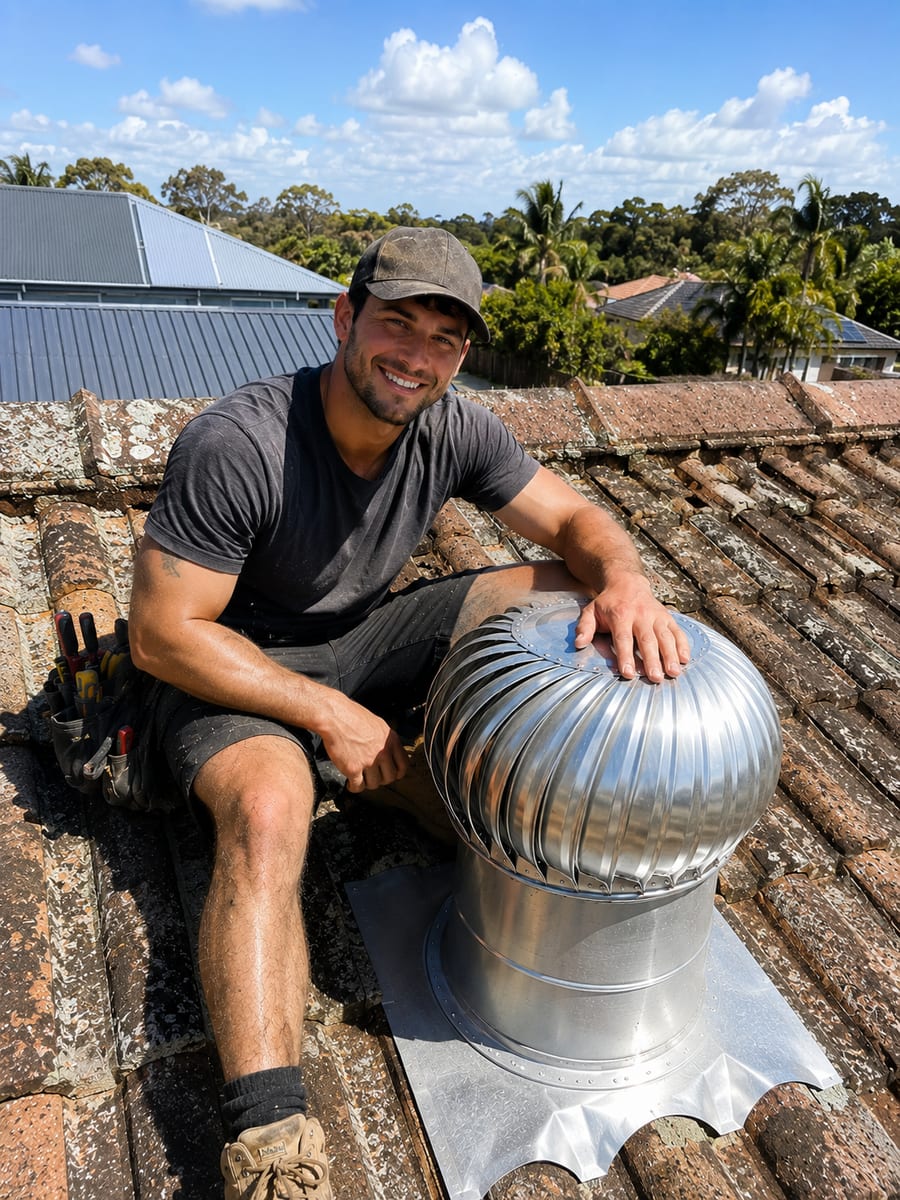
Do Whirlybirds Actually Work in Perth?
By Dave · 25 February 2026 · 4 min read
Yes — and Perth's climate suits them better than most Australian cities. But "they work" deserves some detail, because the internet is full of both breathless claims and blanket dismissals, and neither is accurate.
What a whirlybird actually does
It extracts air from the roof cavity — the sealed space between your ceiling and your roof. It does not cool your rooms directly, it does not replace insulation, and it does not replace air conditioning.
What it does is stop your ceiling behaving like a radiator. On a 38°C Perth day, an unventilated roof cavity climbs past 60°C, and that heat keeps conducting down through the ceiling for hours after sunset. Venting the cavity means the ceiling stops being a heat store, which is why the effect is most obvious in bedrooms at 9 or 10pm.
The Fremantle Doctor is the reason it works here
Perth's afternoon sea breeze is one of the most reliable in the country. Through summer it typically builds through the early afternoon and holds into the evening — precisely the window when the roof cavity is at its peak temperature.
That timing is genuinely lucky. A wind-driven turbine is at its strongest exactly when there is the most heat to remove. In cities without a dependable afternoon breeze, whirlybirds are a much weaker proposition.
Where they underperform — honestly
- Still mornings. On a hot, calm February morning before the breeze arrives, output falls right off. Warm air rising through the turbine still creates some draw, but not much.
- Sheltered roofs. A single-storey home hemmed in by two-storey neighbours or heavy tree cover may barely see the breeze at roof level.
- Inland suburbs. Out toward Midland, Ellenbrook and Forrestfield the sea breeze arrives later and lighter, while roof temperatures run hotter.
- No intake venting. If air cannot get into the roof cavity, it cannot leave. This is the single most common reason someone concludes "whirlybirds don't work".
What to expect after installation
Realistic numbers: a roof cavity that was hitting 60°C+ typically comes down 15–20°C on a hot afternoon with adequate ventilation. Ceiling surface temperature follows, and rooms hold less heat into the evening.
You will notice it most in single-storey homes with living areas directly under the roof, and in upstairs bedrooms of two-storey homes. You will notice it least in rooms with a floor above them.
The winter benefit nobody mentions
Perth winters are wet, and warm moist air from inside your house rises into the roof cavity. In an unventilated roof it condenses on cold surfaces overnight — which is where damp insulation, musty smells and mould on the underside of the sarking come from.
Ventilation removes that moisture year-round. It is a quieter benefit than summer cooling, but a real one.
The honest summary
Whirlybirds are a cheap, zero-running-cost improvement that measurably reduces roof cavity temperature in a city with a reliable afternoon breeze. They are not air conditioning, they are not magic, and on a still morning they do very little.
If your roof is sheltered or inland, a solar vent is the better tool for the same job. Either way, the question is worth two minutes on the phone before you spend anything.
Want a fixed price for your roof?
Tell Dave your roof type and rough ceiling size through the form and you will have a fixed price the same business day. No site visit, no obligation.