Why Perth Roof Cavities Hit 60°C — And What It Costs You
By Dave · 24 March 2026 · 5 min read
On a 38°C Perth afternoon, the air in your roof cavity is not 38°C. It is comfortably past 60°C, and on a dark Colorbond roof with no ventilation it can go higher again. Here is why that happens, and why the effect is worst long after the sun has gone down.
Where the heat comes from
Roofing material absorbs solar radiation all day. Tiles and steel both re-radiate that heat downward into the cavity, and because that space is essentially sealed, the hot air has nowhere to go. It stratifies — the hottest layer sitting right up under the ridge — and it keeps building through the afternoon.
Perth makes this worse than most cities for one simple reason: sun hours. Long, cloudless summer days mean the roof is absorbing energy for far longer than in a city with afternoon cloud build-up.
Why your bedroom is hottest at 10pm
This is the part that surprises people. Your ceiling — plasterboard, insulation batts, roof framing — is a thermal mass. It spends the day soaking up heat from the cavity above, then releases it slowly downward once the outside air starts cooling.
So the outside temperature drops at 7pm, you open the windows, and the room still feels stifling at 10. That is not your imagination and it is not poor insulation — it is a hot ceiling radiating into the room. Insulation slows the transfer; it does not remove the heat.
What it costs you
Air conditioning has to fight that radiant load. A room with a 45°C ceiling surface needs the aircon working harder and longer to hold 24°C than the same room with a 30°C ceiling. Every degree of ceiling temperature is extra runtime.
Reported reductions in cooling costs after installing adequate roof ventilation are commonly in the 20–30% range, though the honest answer is that it depends heavily on your roof colour, insulation and how much you run the aircon. What is not in dispute is the direction: less heat in the cavity means less work for the aircon.
What ventilation actually changes
Moving air through the cavity removes the heat rather than storing it. A properly ventilated Perth roof typically runs 15–20°C cooler than an unventilated one on the same afternoon, and — more usefully — it sheds that heat as the day cools instead of holding it into the night.
The practical difference people report is not "the house feels air-conditioned". It is that the evening is normal again: rooms cool down when the outside air does.
Insulation and ventilation do different jobs
Insulation resists heat transfer. Ventilation removes the heat. They are complementary, not alternatives, and doing one badly undermines the other — hot air trapped above good insulation will still find its way down eventually, just more slowly.
Worth knowing: heat also degrades insulation performance over time, and constant thermal cycling is hard on roof timbers and sarking. Venting the cavity extends the life of the things above your ceiling as well as making the rooms below it liveable.
Winter is the other half of the story
Perth winters are wet, and warm moist air from showers, cooking and breathing rises into the roof cavity. Without ventilation it condenses on cold surfaces overnight — damp insulation, musty smells, and mould on the underside of the sarking.
The same airflow that removes summer heat removes winter moisture. It is the less glamorous benefit and often the more expensive problem to leave unsolved.
Where to start
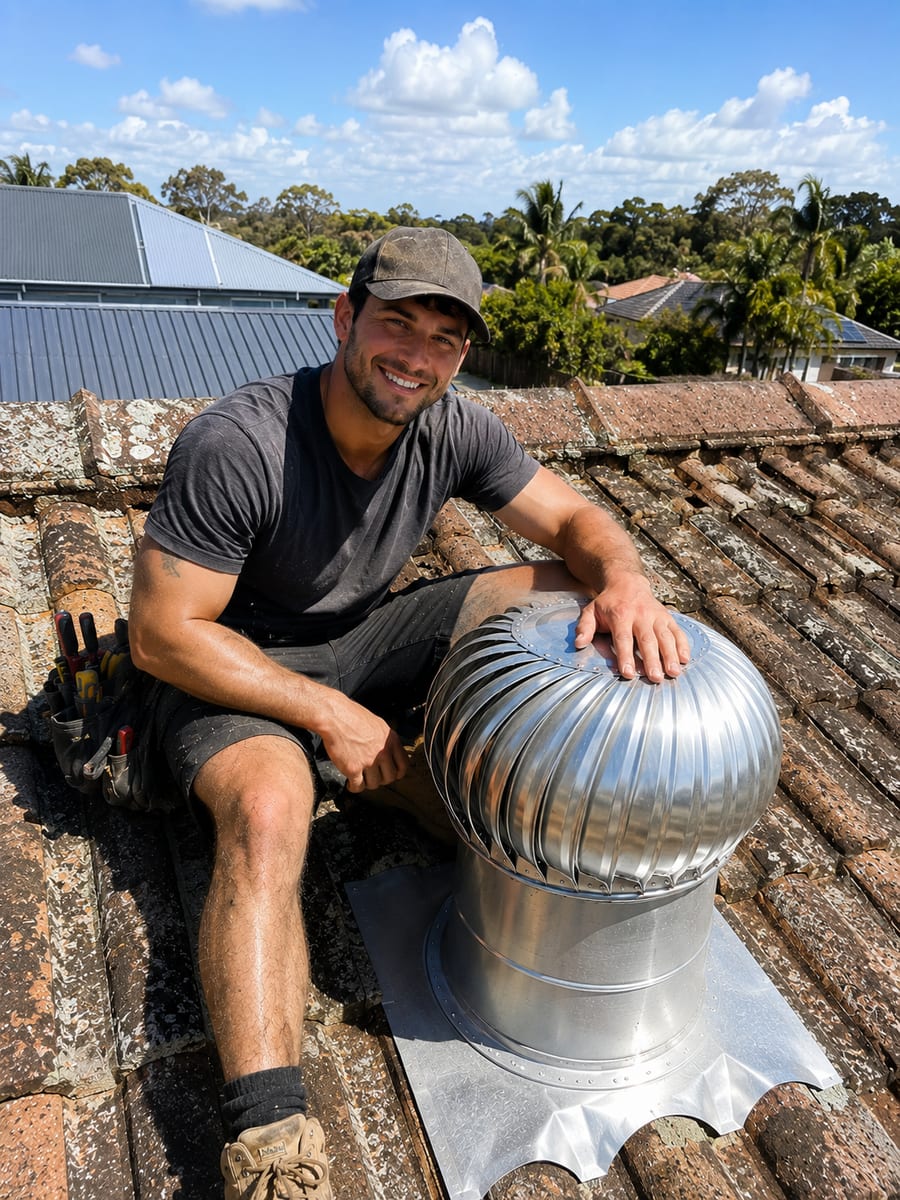
Two to four whirlybirds from $350 each, or a solar vent from $750, is the usual answer for a Perth home. Which one depends on your roof's wind exposure and how much ceiling area you are trying to cover — a two-minute phone call will settle it.
Want a fixed price for your roof?
Tell Dave your roof type and rough ceiling size through the form and you will have a fixed price the same business day. No site visit, no obligation.